

11 min read
In the rush to adopt Generative AI, one critical factor often gets buried under promises of scale and hype: security. Many of the largest AI...

9 min read
28/03/2026
As artificial intelligence embeds itself into the fabric of enterprise operations (from compliance workflows and intelligence analysis to multilingual customer service), a question that was once confined to research papers has become an urgent boardroom concern: How do we ensure that these systems do what we actually need them to do?
This is the essence of model alignment: a discipline of values engineering—(the systematic process of encoding an organization’s intent, ethics, domain knowledge, and operational constraints into the behavior of its AI systems. For organizations that depend on precision, like government agencies handling classified communications, healthcare networks processing patient records, and financial institutions navigating regulatory frameworks, model alignment is foundational and core to the good working of their AI data operations.
For us at Pangeanic, model alignment is what we do every day. From our collaboration with the Barcelona Supercomputing Center (BSC) on European language model development to the fine-tuning of task-specific Small Language Models (SLMs) for law enforcement, defense, and public administration, alignment (values engineering) is the thread that connects every solution we deliver. This article explains what model alignment means and why it matters more than ever, and how Pangeanic’s approach sets our mission apart in the emerging Sovereign AI era.
In its broadest sense, model alignment refers to the set of techniques and processes that ensure an AI system’s behavior is consistent with human intentions, values, and domain-specific requirements. An aligned model does not merely generate fluent text, but generates appropriate text. This means outputs that are accurate, safe, contextually relevant, and compliant with the rules and norms of the domain in which it operates.
An unaligned model is, in effect, a brilliant generalist with no judgment. It may produce outputs that are grammatically perfect yet factually dangerous: fabricating legal citations, inventing medical dosages, hallucinating financial figures, or surfacing culturally inappropriate content in a language it barely understands. The consequences range from embarrassment to regulatory sanctions, from diplomatic incidents to operational failures. We have all been witnesses of such hallucinations with all models.
Alignment addresses this gap through a combination of training strategies that teach the model not just what to say, but what not to say, and crucially, why. This is values engineering in practice: shaping the model’s reward structure to consistently prefer helpful, accurate, and safe outputs over responses that merely look plausible.

Alignment is not a single technique but a layered process. Each stage refines the model’s behavior, progressively narrowing the gap between what a general-purpose model can do and what your organization needs it to do.
Supervised fine-tuning is the starting point. A pre-trained model is further trained on a curated dataset of high-quality, human-verified examples that reflect the desired behavior. Think of it as showing the model what excellence looks like in your specific domain: correct legal terminology, the right tone for a government communiqué, the precise technical vocabulary of automotive engineering or pharmaceutical regulation.
At Pangeanic, SFT is at the heart of our Small Language Model customization process. When we build a task-specific SLM for a client (whether the Spanish Tax Agency (AEAT), the International Boundary and Water Commission (IBWC), or a global news agency), we begin by curating and labeling proprietary datasets that capture the organization’s terminology, processes, and compliance requirements. This data becomes the model’s expert training material.
SFT teaches a model what good outputs look like, and then RLHF teaches it why some outputs are better than others. The process works by collecting human evaluators’ rankings of model responses (which answer is more helpful? which is safer? which is more appropriate?) and using those preferences to train a reward model. The reward model then guides further training via reinforcement learning (typically using algorithms such as Proximal Policy Optimization, or PPO), progressively pushing the model toward outputs that humans prefer.
RLHF is what separates a competent text generator from a model capable of navigating complex, high-stakes interactions with nuance and restraint. It is the technology that transformed AI from a text-completion engine into a conversational partner, and it is the core technique behind the behavioral refinement of models from OpenAI, Anthropic, Google, and Mistral.
Essential reading: What is RLHF (Reinforcement Learning from Human Feedback) and How Does It Work?
Yet RLHF introduces its own challenges. Reward hacking (where a model learns to game the reward signal by producing verbose but hollow outputs) is a well-documented failure mode. Managing the alignment between the reward model and genuine human preferences requires continuous iteration. This is precisely the kind of technical detail that Pangeanic’s AI Lab focuses on in every deployment.
RLHF is powerful but expensive. It requires large-scale human annotation and careful management of the reward model to avoid degenerate behaviors.
Two important alternatives have emerged. Direct Preference Optimization (DPO) simplifies the process by directly optimizing the model on preference pairs, without requiring a separate reward model, thereby reducing computational cost and pipeline complexity. Constitutional AI (CAI), pioneered by Anthropic, takes a different approach: instead of relying entirely on human annotators, it equips the model with a set of behavioral principles (a “constitution”) and trains it to critique and revise its own outputs against those principles.
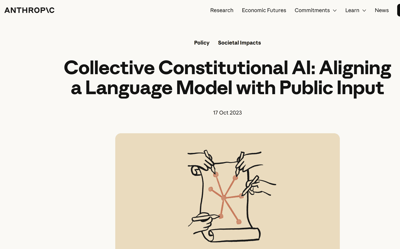
Both methods represent important advances in making alignment more scalable and more accessible, particularly for organizations that cannot afford the annotation infrastructure required for full-scale RLHF. At Pangeanic, we evaluate and combine these techniques depending on the use case, the volume of available preference data, and the client’s operational constraints.
Alignment does not exist in a vacuum. A perfectly tuned model is worthless if it runs on infrastructure that undermines the very sovereignty and control that alignment is designed to guarantee. This is the insight that is reshaping enterprise AI architecture in 2026.
The recent announcement of the Palantir AI OS Reference Architecture (AIOS-RA) with NVIDIA illustrates the direction. It was unveiled in March 2026, and this collaboration delivers a full-stack sovereign AI infrastructure (from NVIDIA Blackwell Ultra GPUs to Palantir’s AIP platform)designed for organizations that require total control over their data, models, and deployment environments. As NVIDIA’s Justin Boitano put it, today’s demanding environments require an architecture built “from silicon to systems to software.”
This philosophy validates what Pangeanic has been building for years. When we deploy a task-specific SLM for the Spanish Tax Agency, it runs inside a penetration-tested, ISO 27001-certified environment where no data leaves the agency’s perimeter. When we deliver a translation model for Veritone compliant with the U.S. Department of Defense’s Iron Bank (one of the world’s most hardened software repositories) every operation runs in a zero-trust, containerized environment. When we support the IBWC/CILA in handling bilateral treaty communications, the model is customized for Mexican Spanish and US English and deployed within the Commission’s own controlled infrastructure.
The principle is the same whether the stack is Palantir’s or Pangeanic’s: alignment without sovereignty is theater. If your data flows through third-party APIs where it may be used to train future public models, if your model runs on infrastructure you do not control, if your compliance team cannot audit the full pipeline from training data to inference, then your alignment guarantees are only as strong as someone else’s terms of service.
Pangeanic’s ECO Intelligence Platform is built on this “zero-leakage” architecture. We deploy into private SaaS, on-premises, or fully air-gapped environments depending on the client’s security posture. The aligned model and the sovereign infrastructure are inseparable. One without the other is incomplete.
Most discussions of model alignment focus on safety and helpfulness in English. But for organizations operating across languages and cultures, alignment has a dimension that is routinely overlooked: linguistic and cultural fidelity. A model that has been carefully aligned in English may still produce outputs that are tone-deaf, grammatically clumsy, or culturally inappropriate in Chinese, Arabic, Farsi, Russian, Catalan, Spanish, or any of the dozens of languages that enterprises and public institutions work with daily.
This is where Pangeanic’s deep roots in European language technology become decisive.
The Barcelona Supercomputing Center (BSC) has been at the forefront of developing large language models that serve Europe’s linguistic diversity. Through projects like AINA (for Catalan), Salamandra, and the broader ALIA initiative, BSC’s Language Technologies Lab uses the MareNostrum 5 supercomputer to train models on carefully curated corpora in Spanish and Spain’s co-official languages.
Pangeanic has been a key collaborator in this effort. Our partnership with BSC spans data annotation, RLHF implementation for model alignment, bias detection, and curation of training datasets for some of Europe’s most advanced language models. Through our PECAT annotation platform, we helped the BSC optimize training data quality: identifying and mitigating biases, labeling data for domain specificity, and ensuring that the resulting models reflect the linguistic and cultural realities of the communities they serve. The datasets Pangeanic created and curated have contributed to training BSC’s Aina and Salamandra models, a work that directly feeds into our Small Language Model initiatives.
This is values engineering at the cultural level: not just teaching a model to be "safe and helpful", but ensuring it is culturally grounded, linguistically accurate, and representative of the values and norms of the people who will use it. BSC’s collaboration with Catalan media organizations to incorporate local news content into model training illustrates this point. The goal was not merely a model that could process Catalan; it was a model that understood Catalan and reflected its culture, idioms, register, and cultural context.
“Developing large language models that represent our languages and cultures requires access to high-quality, culturally grounded training data. That is precisely the capability that partnerships like ours with Pangeanic provide.”
— Maite Melero, BSC Language Technologies Lab
Here is the critical insight that connects alignment to enterprise strategy: alignment is easier, cheaper, and more effective when the model is smaller and task-specific.
General-purpose large language models (GPT-4, Claude, Gemini) are built to do everything. That generality is both their strength and their weakness. Aligning a model that must handle every conceivable topic, in every language, across every domain, is an enormously expensive and perpetually incomplete project. There will always be edge cases, domain gaps, and cultural blind spots.
A task-specific Small Language Model, by contrast, operates in a bounded domain. It knows what it needs to know. It can be aligned with your specific terminology, your compliance requirements, your organizational values... and nothing else. The alignment surface is smaller, the training data is more focused, and the result is a model that performs its designated task with a level of precision that no general-purpose giant can match.
In April 2025, Gartner predicted that by 2027, organizations would implement small, task-specific AI models with usage volumes at least three times greater than general-purpose LLMs. The driving forces are exactly those that our clients experience daily: the need for contextual accuracy, cost efficiency, faster response times, and data sovereignty. Sumit Agarwal, VP Analyst at Gartner, noted, "specialized models fine-tuned on specific functions or domain data provide quicker responses, use less computational power, and reduce operational costs."
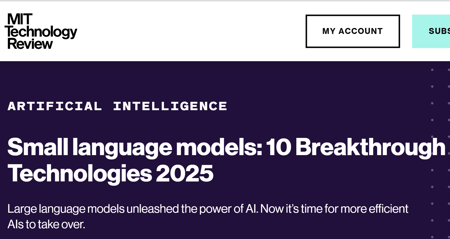
And this was not a fringe prediction. MIT Technology Review named small language models one of its ten breakthrough technologies for 2025. The Alan Turing Institute demonstrated that a 3-billion-parameter model, augmented with retrieval and reasoning strategies, achieved near-frontier performance on real-world health queries, small enough to run on a laptop. The market is heading in one direction.
 |
Why alignment favors SLMs: 5 advantages that matter to the enterpriseTighter domain control. An SLM fine-tuned on your organization’s data can be aligned to your exact requirements (specific terminology, regulatory constraints, tone of voice) without the noise and unpredictability of a model trained on the entire internet. A localization SLM does not need to write poetry; it needs to know your product glossary and compliance rules. |
Data sovereignty and privacy. SLMs can run on-premises, at the edge, or in private cloud environments, ensuring that sensitive data never leaves your controlled perimeter. This is critical for government agencies, defense organizations, and enterprises subject to GDPR, HIPAA, or equivalent regulations. At Pangeanic, we deploy models inside secure environments, including the U.S. Department of Defense’s Iron Bank repository.
Lower Total Cost of Ownership (TCO). Fewer parameters mean less compute for fine-tuning and RLHF, and smaller preference datasets are sufficient to achieve robust alignment. Right-sized SLMs deliver stable response times and a known cost envelope, replacing the spiky GPU bills and unpredictable latency of API calls to frontier models. For high-volume production workloads (millions of translation API calls per day, continuous document classification, real-time intelligence analysis) this predictable TCO is decisive. The last increments of quality from frontier models become disproportionately expensive; enterprise buyers respond rationally by routing volume workflows to models that are “good enough” with predictable cost and governance.
Faster alignment loops. SLMs can be re-tuned and updated on shorter cycles (weekly or even daily) based on new human feedback and operational data. This means your model stays aligned with evolving business requirements, rather than drifting as your domain changes.
Auditability and compliance. A smaller model with a well-documented training pipeline is far easier to audit than an opaque frontier system. For regulated industries, this is not a nice-to-have. It is a requirement. Compliance officers can trace every decision from training data through fine-tuning to inference output.
Model alignment is evolving from a safety concern into a strategic differentiator. As enterprises increasingly recognize the value of their private data and domain expertise, the ability to build and deploy well-aligned, task-specific models becomes a source of competitive advantage and not just a risk mitigation exercise.
Gartner goes further, suggesting that enterprises will begin to monetize their proprietary models, offering access to these specialized resources to customers and even competitors. This is about to mark a fundamental shift from a protective approach to data toward a more open, collaborative use of knowledge. We all know AI Labs benchmark against each other, from China to knowing if you are beating DeepL or Google in machine translation. By commercializing their proprietary models, enterprises can create new revenue streams while fostering a more interconnected ecosystem.
At Pangeanic, we see this future clearly. The organizations that will lead in the next phase of AI adoption are not those that use the biggest model. They are those that use the right model, one that is precisely aligned with their domain, their language, their values, and their operational requirements. A model that is not just powerful, but trustworthy. A model that runs on infrastructure they own.
After the hype of “one model to rule them all,” the enterprise world is rediscovering what Pangeanic has known for over a decade: a model built specifically for your domain is faster, cheaper, safer, and more accurate than a generic giant. Values engineering (model alignment in its fullest sense) is what makes that possible.
Understand the core alignment technique: Read our technical deep dive What Is RLHF and How Does It Work? for a comprehensive look at the algorithm that transformed conversational AI.
Explore our Small Language Model solutions: Learn how Pangeanic helps enterprises deploy task-specific, privacy-preserving AI at pangeanic.com/small-language-model-customization.
See alignment in action: Discover how Pangeanic and the Barcelona Supercomputing Center are building Europe’s language AI infrastructure in our BSC use case.
See sovereign deployment at work: Read how Pangeanic delivered a secure translation engine through the U.S. Department of Defense’s Iron Bank in our Veritone security case study.
Ready to align AI with your business? Share your use case and security requirements. We’ll recommend the best deployment model and build a solution you can operationalize with confidence. Contact us.
11 min read
18 min read
 Amando Estela: 12/19/25
15 min read
 Manuel Herranz: 06/25/26