Arabic machine translation is accurate enough for some tasks and unreliable for others. The difference is not the model. It is the structure of the language and the context in which it is used.
This is where many enterprise projects fail. They assume that improvements in large language models apply evenly across languages. Arabic does not behave like English or Spanish. Accuracy depends on dialect, morphology, domain language and evaluation.
Arabic is not one language
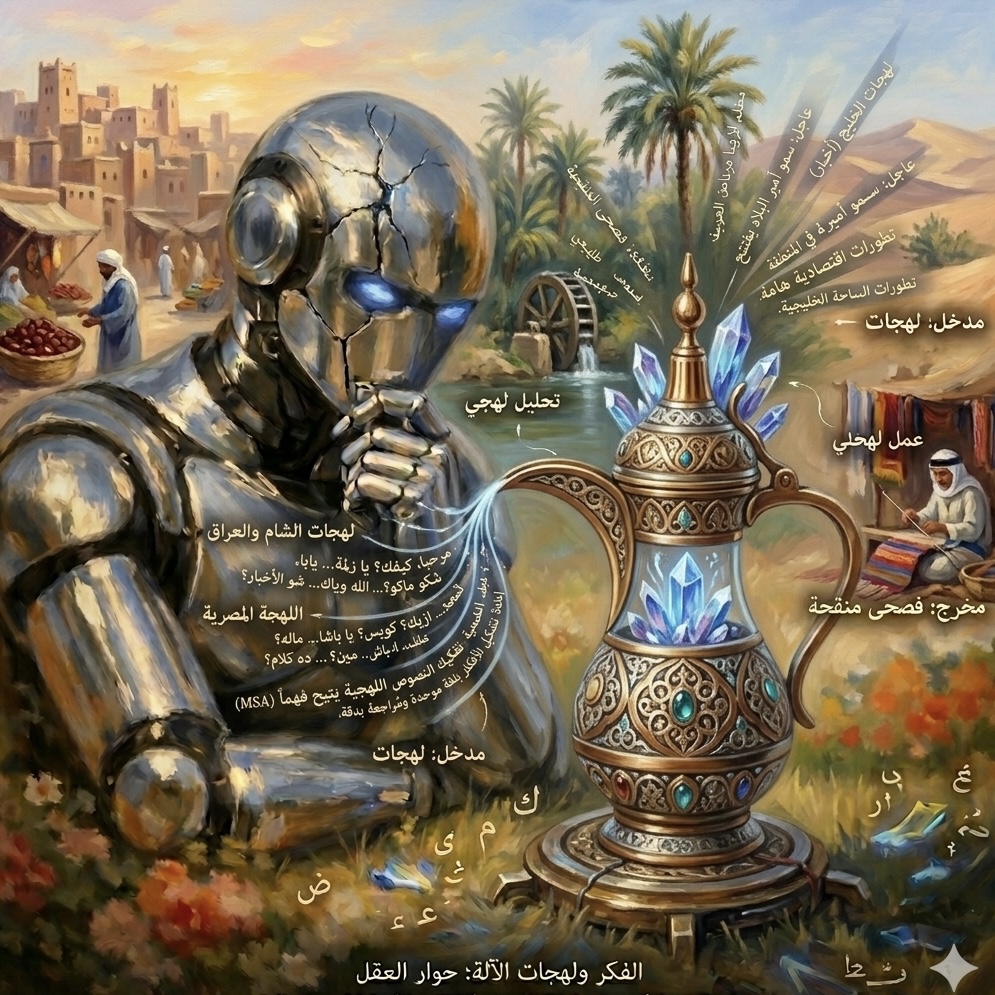
Arabic combines a standardized written form with multiple regional variants. Modern Standard Arabic is used for formal communication, while spoken variants differ significantly across regions. Egyptian, Gulf, Levantine and Maghrebi Arabic can diverge in vocabulary, syntax and meaning.
Machine translation systems trained on mixed or unbalanced data struggle to resolve this variation. A sentence that is acceptable in one context may be incorrect or unnatural in another.
This is why many systems appear accurate in demonstrations but fail in production environments where inputs are inconsistent.
Accuracy depends on domain, terminology and workflow, especially in human versus AI Arabic translation workflows.
Examples of Arabic dialect variation
The phonetic transcription below is approximate. Arabic dialects vary by country, city and speaker, but even simple everyday phrases show how far apart variants can be in practice.
| Meaning |
Modern Standard Arabic |
Egyptian Arabic |
Levantine Arabic |
Gulf Arabic |
| What do you want? |
ماذا تريد؟
mādhā turīd? |
عايز إيه؟
ʿāyez ēh? |
شو بدك؟
shū biddak? |
وش تبي؟
wesh tibī? |
| How are you? |
كيف حالك؟
kayfa ḥāluka? |
إزيك؟
izzayyak? |
كيفك؟
kīfak? |
شلونك؟
shlōnak? |
| I want to go |
أريد أن أذهب
urīdu an adhhab |
عايز أروح
ʿāyez arūḥ |
بدي روح
biddī rūḥ |
أبغى أروح
abghā arūḥ |
These differences are not interchangeable. A system trained primarily on Modern Standard Arabic may produce grammatically correct output that sounds unnatural or distant in conversational contexts. This is one of the reasons why Arabic dialect translation remains a persistent challenge in machine translation.
Where Arabic machine translation performs well
Arabic machine translation can achieve high accuracy in controlled conditions:
- Modern Standard Arabic content
- General or non-specialized language
- High-resource domains such as news or public information
- Repetitive or structured content
In these cases, models benefit from available data and predictable linguistic patterns. Quality can be acceptable for internal use, content discovery or initial drafts.
Where accuracy breaks down
Performance declines in scenarios that matter most to enterprises:
- Dialect variation across regions
- Technical, legal or medical terminology
- Ambiguous or context-dependent language
- Customer-facing or public communication
Errors in these contexts are not always obvious. They may appear fluent but introduce incorrect meaning, inappropriate tone or regulatory risk.
Accuracy is a workflow problem
Enterprises do not need perfect models. They need controlled outcomes.
Accuracy improves when machine translation is integrated into structured workflows that include:
- Domain adaptation using relevant data
- Terminology control and glossaries
- Evaluation datasets and quality gates
- Human review for high-risk content
Without these elements, accuracy remains inconsistent regardless of model size or architecture.
The role of data in Arabic MT accuracy
Arabic machine translation is fundamentally a data problem. Systems require balanced datasets that reflect dialects, domains and real-world usage.
Organizations that invest in Arabic training data, annotation and evaluation achieve better results than those relying on generic models.
This is especially important for domain-specific use cases where terminology and consistency matter more than fluency.
When to rely on machine translation
Machine translation is suitable for:
- Large-scale content processing
- Internal communication
- Content discovery and indexing
- First-pass translation workflows
When human review is required
Human review is required when accuracy has consequences:
- Legal and regulatory content
- Medical and technical material
- Customer-facing communication
- Brand-sensitive messaging
In these cases, machine translation becomes a tool within a broader process, not a replacement for expertise.
Enterprise reality
Arabic machine translation is not a binary choice between human and AI. It is a layered system.
Enterprises combine machine translation, human expertise and data pipelines to achieve reliable outcomes. The advantage lies in control, not in raw model capability.
For a deeper view of how these systems are designed, see Arabic machine translation systems.
Conclusion
Arabic machine translation can be accurate, but only within defined boundaries. Accuracy declines when dialect, domain and risk are not controlled.
The question is not whether Arabic machine translation works. It is whether it is deployed with the right data, workflow and oversight.
Arabic machine translation FAQ
Is Arabic machine translation accurate?
Arabic machine translation can be accurate for structured content and Modern Standard Arabic. Accuracy decreases when dialect variation, domain language or context complexity are involved.
Why is Arabic harder for machine translation?
Arabic combines complex morphology with multiple regional variants. This increases ambiguity and makes it harder for models trained on mixed data to produce consistent results.
Can AI translate Arabic dialects?
AI can translate some Arabic dialects, but performance varies significantly depending on available data. Many dialects remain underrepresented in training datasets.
Do enterprises rely on Arabic machine translation?
Enterprises use machine translation for scale, but typically combine it with human review, terminology control and evaluation workflows to ensure reliable outcomes.
When should Arabic machine translation not be used alone?
Machine translation should not be used alone for legal, medical, technical or customer-facing content where errors can introduce risk or misinterpretation.


 Manuel Herranz: 05/31/24