



The TAUS Massively Multilingual AI Conference in Dublin on June 10-11, 2025 proved to be a pivotal moment for our industry, bringing together leaders...
5 min read
12/03/2015
Update 2025: This post was originally published in 2015. The digital world has shifted. Search is no longer just about "blue links"—it’s about AI Overviews, Generative Experience, and Answer Engines. We have completely rewritten this guide to reflect the reality of international SEO for 2025 and 2026.
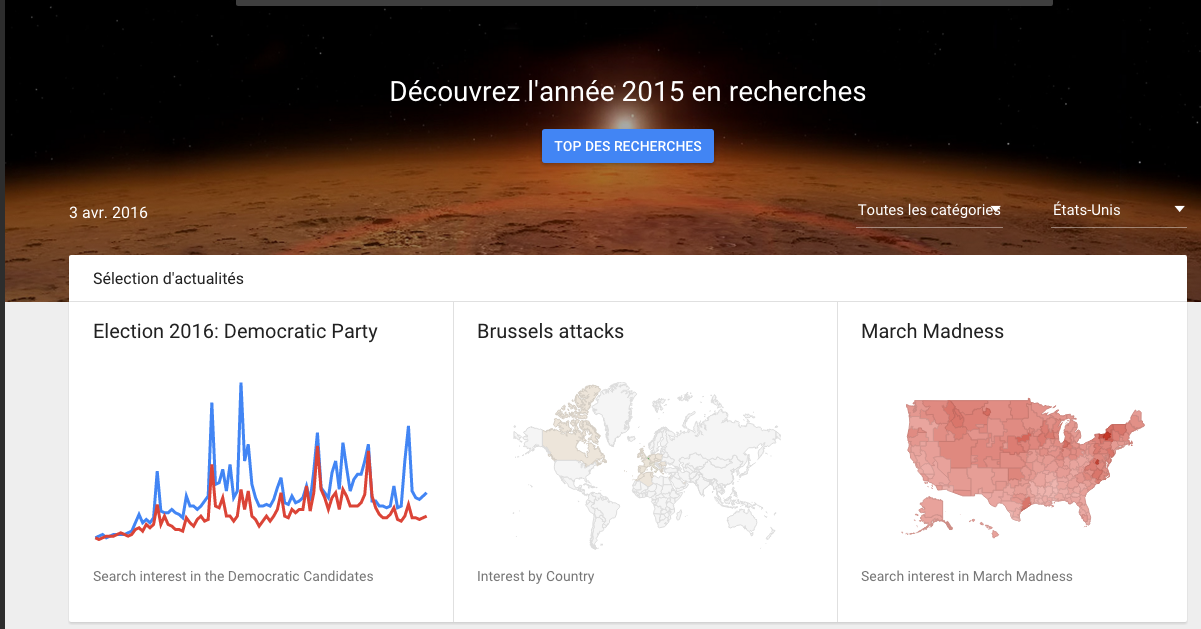
Google Trends is an excellent tool to find what and how people are searching for
In 2015, we wrote that "keyword translation is an art." Ten years later, it has become a sophisticated science powered by Artificial Intelligence, yet the "art" of human understanding is more critical than ever.
For years, the goal was simple: rank for a specific string of words on Google's first page. Today, your content isn't just being indexed by a crawler; it is being "read" and synthesized by AI Overviews (SGE), ChatGPT, Perplexity, and Gemini.
If you are still "translating keywords" from English to Spanish, French, or Japanese, you aren't just missing traffic... you are invisible to the AI models that now control discovery.
Here is how Multilingual SEO has evolved and how your company can dominate the global search landscape in 2026.
1. The death of "Keyword Translation" (and the rise of entities)
For years, businesses made a fatal mistake: they took their high-performing English keywords (e.g., "cheap flights") and used a dictionary to translate them (e.g., "vuelos baratos").
In 2025, this literal approach fails because modern search engines think in "Entities" and "Topic Clusters," not just words.
-
Search Intent varies by culture: A German user looking for energy solutions might not search for "solar panels" (the object) but for "independent energy systems" (the outcome). Direct translation misses the intent.
-
Semantic Mapping: If you optimize for a translated word that doesn't semantically map to the correct "entity" in the local culture, AI search tools will ignore you.
The Lesson: You are no longer translating words; you are localizing entities and user intent.
2. Enter AEO: Answer Engine Optimization
The most significant shift in the last decade is the move from "Search" to "Answer." When a user in Tokyo asks Google, Perplexity, or ChatGPT a question, they often don't get a list of links; they get an AI-generated answer.
To appear in that AI answer (the "Zero-Click" result), you must optimize for AEO (Answer Engine Optimization):
-
Atomic Clarity: AI models love clear, concise answers. Your localized content should feature direct definitions (e.g., "What is X?") at the top of the page to increase chances of being featured in an AI Overview.
-
Voice & Conversational Search: With the rise of voice assistants, people search in natural sentences. “What is the best CRM?” becomes “Which CRM software is compliant with Italian privacy laws?” Your content must answer these specific, long-tail local queries naturally.
3. The technical foundation: metadata & structure
Even the best content will fail if the technical signals are wrong. As ChatGPT and Google bots crawl your site, they look for specific structural clues that define your location and language.
Your 2025, 2026, and from now on, all your online publications checklists must include:
-
Hreflang Tags: You must explicitly tell search engines which version of your page is for which country (e.g.,
es-mxfor Mexico vs.es-esfor Spain,Fr-cafor French Canadian vs. Fr-frfor France). This has not changed. -
Localized Metadata: It is not enough to translate body text. You must localize URL slugs, Title Tags, Meta Descriptions, and Image Alt Text. These are the primary signals AI uses to understand context. This has not changed either, it is good SEO practice.
-
Structured Data (Schema): Mark up your content so AI can easily "extract" facts about your products, prices, and reviews in every target language. This is where the "new stuff" begins.
4. The paradox: why you need "Human-in-the-Loop"
Here is the paradox of the AI era: The more content is generated by AI, the more search engines value Human verification.
Pure Machine Translation (MT) often sounds "robotic" and lacks the cultural nuance to signal Trust (the 'T' in E-E-A-T: Experience, Expertise, Authoritativeness, and Trustworthiness). And that is why we developed Deep Adaptive AI Translation, to make fluent LLM translation sound just as intended, with your approved terminology and taking your style as a reference, whilst minimizing hallucinations.
- Hallucinations: An AI might translate a legal term correctly in a literal sense, but incorrectly for the specific jurisdiction of France vs. Canada.
- Cultural Tone: An aggressive sales pitch that works in New York might offend users in Scandinavia.
At Pangeanic, we champion a Human-in-the-Loop (HITL) approach. We use advanced AI to handle the scale of translation, but expert human linguists review and refine the "entities" to ensure they match local search intent. This gives you the speed of AI with the ranking power of human quality.
The 2026 workflow for global growth
How do you put this into practice? That is the question! Follow this modern workflow for 2025, 2026 and beyond!
- Define Target Markets: Don't just translate for "everyone." Use data to identify high-potential regions.
- Native Keyword Research: Use global tools (such as Ahrefs or SEMrush) to identify topic clusters popular in your target region, rather than translating your English keyword list.
- Localize & Optimize: Adapt your content for local culture and dialects. Ensure your Hreflang tags and metadata are perfectly implemented.
- Monitor & Iterate: AI search trends change weekly. Monitor your traffic not just for clicks, but for visibility in AI snippets and voice results.
Conclusion: go global, but go native
The internet of 2026 (and beyond!) is already crowded with AI-generated noise. To stand out, your international content cannot just be a "translation." It must be a locally authoritative resource that answers user questions better than anyone else.
It’s time to move beyond simple "Keyword Translation." You need a strategy that combines AI efficiency with Human cultural expertise.
Ready to dominate the AI Search landscape in every language?
Contact Pangeanic today to discuss your Multilingual AI SEO Strategy.
Frequently Asked Questions
What is the difference between keyword translation and entity localization?
Keyword translation converts phrases from one language to another. Entity localization adapts meanings, intent, and the underlying concepts (entities) that search engines and AI models use to understand topics across cultures and markets.
What is AEO (Answer Engine Optimization), and why does it matter for multilingual content?
AEO optimizes content to be selected as a direct answer by AI-driven search experiences. In multilingual contexts, it matters because AI systems must trust your localized page as the best answer in that language and region.
Does AI Overview (SGE) reduce organic traffic, and what can brands do?
AI-generated answers can reduce clicks for some queries. Brands can respond by publishing clearer, more authoritative content, structuring pages for answer extraction, and building strong entity coverage that AI can cite and summarize.
Why is literal keyword translation harmful for international SEO?
Literal translations often miss local search intent and cultural phrasing. That mismatch can cause you to optimize for queries that locals don’t use, reducing relevance and visibility in both traditional search and AI answers.
What technical SEO elements are essential for multilingual SEO in 2025–2026 and beyond?
Hreflang implementation, localized URLs, localized metadata (titles and descriptions), consistent site structure, and structured data (Schema.org) are foundational signals for correct indexing and regional targeting.
Do we need different content for es-es and es-mx?
Often, yes. Even within the same language, regional vocabulary, compliance language, and search intent differ. Separate regional pages with correct hreflang signals help search engines serve the best version.
How does structured data help with AI SEO?
Structured data makes key facts and page meaning easier to parse. It supports richer understanding by search engines and can improve how your content is interpreted for AI summaries and answer selection.
Is Machine Translation enough for SEO localization?
Machine Translation accelerates scale, but SEO outcomes depend on intent alignment, terminology, and tone. A Human-in-the-Loop review typically improves naturalness, trust signals, and market fit.
What is a topic cluster, and how should it be localized?
A topic cluster is a set of interlinked pages covering a theme comprehensively. Localization should adapt not only wording, but also the cluster structure and subtopics to match local user journeys and questions.
How can we measure success beyond rankings and clicks?
Track visibility in featured snippets or AI answer placements (where available), impressions by market, engagement quality, conversions by region, and whether localized pages attract the right queries for your product category.
How can Pangeanic help with multilingual AI SEO?
Pangeanic supports multilingual content workflows combining AI scale with expert review, helping organizations localize entities and intent, implement technical SEO best practices, and structure content for both classic search and AI-driven discovery.